Moon Society/Lunar Development World Map

Courtesy of James Rogers of Lunarpedia


View Larger Map

10 September 2008

McCain & Obama's Positions on Space Exploration

A bit of a long read.  McCain goes first because his is much shorter.

As President, John McCain will – 


  • Ensure that space exploration is top priority and that the U.S. remains a leader;
  • Commit to funding the NASA Constellation program to ensure it has the resources it needs to begin a new era of human space exploration.
  • Review and explore all options to ensure U.S. access to space by minimizing the gap between the termination of the Space Shuttle and the availability of its replacement vehicle; 
  • Ensure the national space workforce is maintained and fully utilized; Complete construction of the ISS National Laboratory;
  • Seek to maximize the research capability and commercialization possibilities of the ISS National Laboratory;
  • Maintain infrastructure investments in Earth-monitoring satellites and support systems;
  • Seek to maintain the nation's space infrastructure;
  • Prevent wasteful earmarks from diverting precious resources from critical scientific research;
  • Ensure adequate investments in aeronautics research.

As President, Barack Obama will –

  • Re-establish the National Aeronautics and Space Council (NASC) to oversee and coordinate civilian, military, commercial and national security space activities.
  • Retaining Options for Additional Shuttle Flights: Barack Obama supports Congressional efforts to add at least one additional Space Shuttle flight to fly a valuable mission and to keep the workforce engaged. He will work to ensure there is adequate funding to support that additional flight so that it does not interfere with developing the Shuttle's successor. 
  • Speeding the Next-Generation Vehicle: Obama will expedite the development of the Shuttle's successor systems for carrying Americans to space so we can minimize the gap. This will be difficult; underfunding by the Bush administration has left NASA with limited flexibility to accelerate the development of the new systems.
  • Using the Private Sector: Obama will stimulate efforts within the private sector to develop and demonstrate spaceflight capabilities. NASA's Commercial Orbital Transportation Services is a good model of government/industry collaboration.
  • Working with International Allies: Obama will enlist international partners to provide International Space Station (ISS) cargo re-supply and eventually alternate means for sending crews to the ISS.
  • Partnering to Enhance the Potential of the ISS: Barack Obama will enlist other Federal agencies, industry and academia to develop innovative scientific and technological research projects on the ISS.
  • Enabling Human Exploration: Obama will use the ISS for fundamental biological and physical research to understand the effects of long-term space travel on human health and to test emerging technologies to enable such travel.
  • Enhancing International Cooperation: The ISS has been a model for international cooperation to achieve peaceful objectives in space, helping develop positive relations with Russia during the 1990s. America must take the next step and use the ISS as a strategic tool in diplomatic relations with non traditional partners.
  • Retaining Options for Extended Operations: Barack Obama will consider options to extend ISS operations beyond 2016. After investing so much in developing the ISS, it would be a shame not to utilize it to the fullest possible extent.
  • Continuing Research and Development Investments to Support Future Missions: Barack Obama will support a robust research and technology development program that addresses the long-term needs for future human and robotic missions. He supports a funding goal that maintains at least 10 percent of the total exploration systems budget for research and development.
  • Drawing in International Partners: Obama will encourage a cooperative framework for the conduct of a long-term and sustainable international exploration initiative. This will enable the United States to leverage its resources and to use space exploration as a tool of global diplomacy. As this framework is developed, Obama will continue NASA's architecture studies and advanced planning to ensure the American space workforce remains engaged and that America can lead the world to long-term exploration of the Moon, Mars, and beyond, in a collaborative and cost-effective way.
  • Partner to Improve Basic Capabilities: Obama will evaluate whether the private sector can safely and effectively fulfill some of NASA's need for lower earth orbit cargo transport.
  • Leveraging Robotic Capabilities to Explore the Solar System: Obama supports increased investment in research, data analysis, and technology development across the full suite of exploration missions including the Mars Sample Return mission and future missions to the Moon, asteroids, Lagrange points, the outer Solar System, and other destinations.
  • Supporting Space-Based Observatories: Platforms like the Hubble Space Telescope, the Chandra X- Ray Observatory, the Gamma Ray Observatory, and the Spitzer Space Telescope have yielded some of the greatest scientific discoveries of the last century. Obama is committed to a bold new set of such platforms and programs to expand our knowledge of the cosmos.
  • Stopping Political Interference: Barack Obama will strengthen baseline climate observations and climate data records to ensure that there are long-term and accurate climate records. He will not use climate change research data for political objectives.
  • Supporting Global Food and Water Needs: The Global Precipitation Measurement mission is an international effort to improve climate, weather, and hydrological predictions through more accurate and more frequent precipitation measurements. Obama will work to launch this mission without further delay.
  • Enhancing Earth Mapping: Obama will continue support for the Landsat Data Continuity Mission, which allows study of the earth's land surfaces and provides valuable data for agricultural, educational, scientific, and government use.
  • Supporting Fundamental Research: Barack Obama will pursue more long-term fundamental research to reduce the risk associated with advancing the state of the art.
  • Advancing Future Transportation Needs: The Obama administration will support aeronautics research to address aviation safety, air traffic control, and noise reduction.
  • Promoting Fuel Efficiency: Rising oil prices not only impact motorists at the pump, they are also squeezing airlines and even the U.S. Air Force, which spent $5.8 billion on fuel in 2006, up from $2.8 billion in 2004. Advanced aeronautical research at NASA could dramatically improve the fuel efficiency of military and civilian aircraft, reducing costs for passengers and taxpayers alike. Barack Obama will support such research.
  • Collaborating on Exploration: The United States needs to fully involve international partners in future exploration plans to help reduce costs and to continue close ties with our ISS partners. NASA has been working with 13 other space agencies to develop a globally coordinated approach to space exploration; Barack Obama will not only continue but intensify this effort. Human exploration beyond low-earth orbit should be a long-term goal and investment for all space faring countries, with America in the lead. 
  • Collaborating on Climate Change Research: Barack Obama will expand and deepen American collaboration with international partners on climate research, both to increase understanding of climate challenges and to demonstrate American leadership in this arena.
  • Negotiating Agreements on "Rules of the Road": Barack Obama will work with other nations to develop "rules of the road" for space to ensure all nations have a common understanding of acceptable behavior. 
  • Opposing Weaponization of Space: Space assets are increasingly important to our national security and our economy, but they are also extremely vulnerable. China's successful test of an anti-satellite missile in January 2007 signaled the beginning of a potential new arms race in space. Barack Obama opposes the stationing of weapons in space and the development of anti-satellite weapons. He believes the United States must show leadership by engaging other nations in discussions of how best to stop the slow slide towards a new battlefield. 
  • Protecting America's Space Assets: Recognizing their vulnerability, Obama will work to protect our assets in space by pursuing new technologies and capabilities that allow us to avoid attacks and recover from them quickly. The Operationally Responsive Space program, which uses smaller, more nimble space assets to make US systems more robust and less vulnerable is a way to invest in this capability.
  • Enhancing the Role of NASA as a Premier Institution of Innovation: Engineers and scientists at NASA have developed state-of-the-art innovations across the technological spectrum in areas ranging from solar cells and imaging to communications and aeronautics. Barack Obama will renew NASA's commitment to innovation-driving basic research that the private sector can use to develop new products for American consumers. 
  • Increasing Commercialization Benefits: Obama will promote cost sharing initiatives between government and industry to increase the state of the art in various technical areas, such as micro- electromechanical systems, nanotechnology, and biotechnology. Obama will establish multi-agency programs that focus on rapid maturation of advanced concepts and transfer to industry for commercialization. 
  • Jumpstarting Consumer Technology: Obama will expand the use of prizes for revolutionary technical achievements that can benefit society, and funds for joint industry/government rapid-to-the- consumer technology advances. 
  • Supporting Commercial Access to Space: Obama will stimulate the commercial use of space and private sector utilization of the International Space Station. He will establish new processes and procurement goals to promote the use of government facilities. We must unleash the genius of private enterprise to secure the United States' leadership in space. 
  • Revising Regulations for Aerospace Export Control: Some sections of the International Traffic in Arms Regulations (ITAR) have unduly hampered the competitiveness of domestic aerospace industry. Outdated restrictions have cost billions of dollars to American satellite and space hardware manufacturers as customers have decided to purchase equipment from European suppliers. While protecting our national security interests, Barack Obama will direct a review of the ITAR to reevaluate restrictions imposed on American companies, with a special focus on space hardware that is currently restricted from commercial export. He will also direct revisions to the licensing process to ensure that American suppliers are competitive in the international aerospace markets, without jeopardizing American national security. 
  • Expanding the American Skill Base in Science and Engineering: Barack Obama fully supports efforts to advance new frontiers in technical areas, such as advanced structures, power generation, communication and navigation systems, and biomedical systems. These efforts address the requirements for exploration, but also have high potential for technological benefits in the private sector as well as in training the next generation of scientists and engineers.

McCain

Obama


Read more...

NASA Teams With Lewis Center and Students Worldwide to Assist With Mission to Moon


Lewis Center for Educational Research

Students at the Lewis Center will become Mission Control from a facility on their campus for the upcoming NASA LCROSS lunar probe scheduled for 2009.  I've seen some post on USENET talking about how the USA is falling behind in the hard sciences.  Initiatives like this are how you re-ignite the spark.  This almost makes me with I was back in school.  Almost.

Spaceref.com


Read more...

Bush Administration's jihad to Retire the Shuttle

This is a "leaked" email from NASA Grand Poobah Michael Griffin to Lynn Cline, Deputy Associate Administrator for Space Operations, provided by the Aero-News Network.  Sabotage the ISS?  

From: Griffin, Michael D. (HQ-AA000)
Sent: Monday, August 18 2008 6:26 PM
To: Cline, Lynn (HQ-CA000)
Cc: Dale, Shana (HQ-AB000); Scolese, Christopher J. (HQ-AI000); Morerell, Paul (HQ-AA000); Gerstenmaier, William H. (HQ-CA000); Gilbrech, RIchard J. (HQ-BA000); SHank, Christopher M. (HQ-AA000); O'Brien, Michael F. (HQ-TA000)
Subject: RE: NAC Agenda

Lynn-

Thanks very much for the heads up. I think Obie should have been on distribution, and have copied him accordingly.

I'm sorry. You're not going to like what I have to say here. There isn't much that I will say below that I Like either, but I'll give you the best analysis that my brain can produce. Any and all who wish to argue or disagree are welcome, even encouraged to do so. Tell me where I'm wrong. Please!

First, and to get it out of the way, I will remind Jack [Jack Schmitt, NASA Advisory Council chair] that the NAC cannot make recommendations in conflict with Executive Branch Policy, and the White House is firm on Shuttle retirement in 2010. (Actually, they can make any recommendation they want, but I have no option but to implement those which are counter to Administration policy.) Jack can, however, couch his recommendation differently so that I can use it. I'll discuss this below.

I actually agree with Jack - the game has changed. I don't agree that we're going to get any more money because of it.

Exactly as I predicted, events have unfolded in a way that makes it clear how unwise it was for he US to adopt a policy of deliberate dependance upon another power for access to ISS. In a rational world, we would have been allowed to pick a Shuttle retirement date to be consistent with Ares/Orion availability, we would have been asked to deploy Ares/Orion as early as possible (rather than "not later than 2014") and we would have been provided the necessary budget to make it so. I realize that no one on this distribution disagrees with me on this point, I'm just saying it again, that's all.

The rational approach didn't happen, primarily because for OSTP and OMB, retiring the Shuttle is a jihad rather than an engineering and program management decision. Further, they actively do not want the ISS to be sustained, and have done everything possible to ensure that it would not be. They were always "okay" with buying Soyuz/Progress, and if it didn't happen, well, that was okay too. You will recall they didn't want us to brink up the need for another INKSNA exemption during budget hearings this year. I disobeyed their wishes in doing so, because we knew that we needed to get this on the table in '08.

But we are where we are. The Russians are not going to back out of Georgia any time soon, certainly not prior to the election. If they don't, INKSNA is DoA, despite Sen. Mikulski's and Nelson's favorable comments in support of a "bipartisan solution". We might get relief somewhere well down the road, if and when tensions ease, but my guess is that there is going to be a lengthy period with no U.S. crew on ISS after 2011. No additional money of significance is going to be provided to accelerate Orion/Ares, and even if it were, at this point we can;t get there earlier than 2014, so it doesn't solve the basic problem. Commercial solutions will ultimately emerge, but not substantially before Orion/Ares are ready, if then. The alternatives are to continue flying Shuttle, or abandon U.S. presence on ISS.

This Administration will not yield with regard to continuing Shuttle operations past 2010, but the next Administration will have no investment in that decision. They will tell us to extend the Shuttle. There is no other politically tenable course. It will appear irrational - heck it will be irrational - to say that we've built a Space Station we cannot use, that we're throwing away a $100 billion investment, when the cost of saving it is merely to continue flying Shuttle. Extending Shuttle creates no damage that they will care about, other than to delay the lunar program. They will not count that as a cost. They will not see what that does for U.S. leadership in space in the long term. And even if they do, they have a problem in the short term that must be solved. Flying Shuttle is the only way to solve it.
 
Thus, the recommendation Jack should give, and the direction I am giving, is that SOMD and SMD need to begin working together to prepare a "Plan B" -- how we would continue to operate Shuttle, in case the new Administration directs us to do so, while doing the least damage possible to Ares/Orion, in the events that (a) extra money is made available and (b) no extra money is made available. Our focus should be on minimizing the collateral damage to NASA caused by the recent events and their likely consequences.

For the record, and without regard to the underlying truth of the proposition, I do not believe the Russians would ever admit -- nor do I think they believe -- that they need us to help them operate ISS. Yes, there are actions we could take to hold ISS hostage, or even to prevent them from using it -- power management stuff, for example. We will not take those actions. Practically speaking, the Russians can sustain ISS without US crew as long as we don't actively sabotage them, which I do not believe we would ever do, short of war. So I will not make the argument that "dependence" works both ways. We need them. They don't "need" us. We're a "nice to have". The argument that we need to get Shuttle out of the way so that conversion of VAB/MAF for Constellation can proceed is simply specious. If we are told to extend Shuttle without any new money, there is no immediate need to convert. If we're given extra money, then the VAB/MAF conflicts are solvable If we absolutely had to find a way for Shuttle and Ares/Orion to co-exist at VAB and MAF, we would. Its only a matter of money. So I'm not going to make this argument either.

Again, I am open to different views, in part because my own view is about as pessimistic as it is possible to be. And certainly I would welcome any correction of factual errors.
Otherwise, please begin preparing the briefings that Jack has requested.

Thanks.

Mike.


Read more...

09 September 2008

Statement of Administration Policy

Direct from the bean counters in the President's Office of Management and Budget, I have found a small document stating the outgoing Administration's opposition to H.R. 6063 because it "mandates specific Space Shuttle flights that greatly threaten NASA’s ability to retire the Shuttle in 2010, an action that is critical to implementing the President’s Vision for Space Exploration."

Here is the actual pdf.

And this is the text of HR 6063.

June 10, 2008 (House Rules)
STATEMENT OF ADMINISTRATION POLICY
H.R. 6063 – National Aeronautics and Space Administration Authorization Act of 2008
(Rep. Udall (D) Colorado and 7 cosponsors)
The Administration supports maintaining a strong national civil space science and aeronautics enterprise and is committed to advancing the quest for new knowledge, discovery, and exploration that is embodied in NASA programs and activities. However, the Administration strongly opposes H.R. 6063 because it mandates specific Space Shuttle flights that greatly threaten NASA’s ability to retire the Shuttle in 2010, an action that is critical to implementing the President’s Vision for Space Exploration. In addition, the Administration has other serious objections to several provisions of H.R. 6063 that must be satisfactorily addressed prior to final congressional action on reauthorization legislation.
The bill contains provisions that mandate two contingency logistics flights and an additional Shuttle flight for the Alpha Magnetic Spectrometer and require that these flights take place before Shuttle retirement, thus effectively superseding the 2010 Shuttle retirement date that is a critical step to enabling successful development of the Crew Exploration Vehicle as called for by the President’s Vision for Space Exploration. Consistent with the Vision, the current Space Shuttle flight manifest is a measured and carefully balanced plan to allow the completion of the International Space Station (ISS), a safe and orderly retirement of the Shuttle, and the smooth transition of facilities and personnel to Exploration Systems programs by September 2010. The direction in this section would almost certainly result in several serious impacts and risks to NASA’s exploration programs and other activities, including: (1) significantly increasing costs of the Shuttle program, not including potential recertification activities; (2) delaying the operational capability of the Orion CEV well beyond its current projected dates; (3) exacerbating transition challenges, including facilities and workforce; and (4) exposing astronaut crews to increased risks. In addition, statutorily mandating additional flights regardless of safety assessments and costs sets a dangerous and unwise precedent.
The Space Shuttle must be retired by the end of 2010, and the NASA Administrator’s authority to make the final determination on Shuttle flights based on safety considerations must be preserved. In addition, any increased cost of an additional Shuttle flight must be satisfactorily accommodated within the President’s proposed discretionary spending total.
The FY 2009 budget request of $17.6 billion is sufficient to achieve NASA’s goals, and the additional $2.6 billion authorized in the bill above the President’s request is inconsistent with the Administration’s fiscal policies. Accordingly, the Administration opposes this increased authorization level.
In addition, H.R. 6063 directs several specific activities under the assumption that additional funding will be appropriated, making it likely they will become unfunded
mandates. Directing activities in this manner would severely disrupt the budgets for NASA’s ongoing, carefully-balanced programs and Centers linked to other high-priority goals and activities. For this reason and in view of associated problematic policy implications, the following requirements should either be removed from the bill or appropriately modified: (1) carrying out an additional procurement for Commercial Orbital Transfer Services (COTS) crew capabilities, and mandating that NASA purchase commercial services regardless of cost; (2) establishing an Exploration-related technology research and development program that would draw funding away from the Orion CEV, delaying its availability; (3) establishing a cross-cutting technology development program within the Science Mission Directorate at a level of five percent of the Directorate’s budget; (4) requiring the continued operation and utilization of the ISS by the United States after 2016, without first mitigating significant budget implications in the outyears; and (5) prescribing specific roles and responsibilities regarding NASA’s work with various advisory and external review committees and other Federal agencies that the Administration believes would be problematic and duplicative of already well-established roles and responsibilities.
The Administration also is concerned with the proposed wording of certain provisions and strongly urges that these provisions be modified before passage of the bill. For example, the direction in the bill to limit NASA’s ability to dispose of Space Shuttle-related hardware is likely to severely disrupt ongoing Shuttle retirement and transition activities. Similarly, the specific wording of other provisions in H.R. 6063, including requiring all space observatories to be serviceable regardless of practicality; overly-prescribed aeronautics research goals; and unproductive astronaut health surveys could lead to serious unintended consequences, including greatly increased costs to carry out these mandates. The Administration calls on Congress to modify these provisions to provide NASA sufficient flexibility to make programmatic and management decisions as necessary.
In addition, the bill directs NASA to initiate discussions with foreign nations on "space traffic management." This provision directly infringes upon the President’s authority to conduct foreign affairs. The United States already actively promotes international cooperation to enhance spaceflight safety and supports consideration of voluntary transparency and confidence building measures in appropriate venues under the leadership of the Department of State, with appropriate assistance from the Department of Defense. These provisions accordingly should be removed. A similar objectionable provision is contained in the bill’s section governing "exploration crew rescue."
Finally, in addition to the significant concerns highlighted above that must be satisfactorily addressed prior to final congressional action, the Administration has an overarching concern about the highly prescriptive nature of the bill and the significant number of reports and studies that this legislation would require. The Administration understands the need for timely information for Congress to conduct its oversight responsibilities; however, the burden that would be placed on various agencies of the Executive Branch, including NASA, is of concern. The Administration looks forward to working with Congress to modify these aspects of the bill.


Read more...

08 September 2008

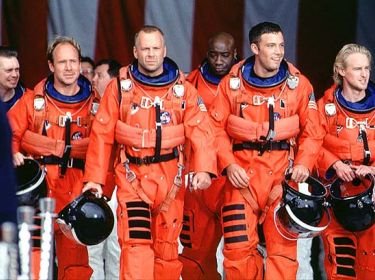
Armageddon, starring Bruce Willis


Russian authorities have warned that the incoming asteroid 99942 Apophis looms as the largest threat to civilization since Bruce and the Chin blew up a Texas sized asteroid with a green nuke. Apophis is scheduled to pass within a tenth of the distance between the Earth and the Moon in 2029 and possibly even collide with the Earth on its next visit in 2036. The Russians imply that an international body administered through the UN similar to WHO and other groups would be acceptable to them.

With every spacefaring nation racing to set up outposts on the Moon, Apophis in my opinion represents a huge opportunity. The asteroid passes inside cis-lunar space twice within the next thirty years. Everyone on the Moon and in orbit is going the need cheap access to what the asteroid contains. Specifically: volatiles. According to researchers at MIT, Apophis is an LL chondrite. That makes it an ordinary chondrite with a very low iron level. Apophis would be a good source of metals and volatiles for any space outpost.

Consider the size of Apophis and this is a windfall. It’s already in orbit. No need to boost from Earth’s surface. If I was finished with school, I’d be doing the cost-benefit analysis on moving Apophis to L-4 of L-5.

Although it’s an older post, this article by SpaceWorks Engineering, a local Atlanta company, outlines the composition of Apophis.


Read more...

04 September 2008

NASA Night Launch

Since the majority of the readers are Firefox users, I thought I'd post this Add-on.  The NASA Night Launch theme is nice enough to have me considering a switch from Opera.

Sorry, no screen shots.


Read more...

02 September 2008

Why Go to Space Pt IV(a)


Read more...

Preparing to Rescue Hubble

http://www.boston.com/bigpicture/2008/09/preparing_to_rescue_hubble.html

This set from Boston.com about Atlantis's upcoming flight to Hubble is simply stunning.  I may have my complaints about NASA, but what they do is simply AMAZING.  No questions asked.


Read more...

Thanks!

I just noticed that I have my first two subscribers!

Welcome aboard and enjoy.


Read more...

Why Go to Space Pt IV


Continued From Part III

I have often had to justify why going into space is a good idea and use of resources when we have so many other problems. Here are some reasons.

But first, a matter of scale. The estimated federal budget for FY 2007 was 2.7 trillion dollars. Trillion, as in 1000 billion. The estimated NASA budget adjusted for inflation $17.2 billion. For that year, NASA consumed 0.6% of the Federal budget. Not even a whole percentage point for the national agency directed to lead us into the next stage of human technological development.

In exchange for 0.6% of the federal budget, you get a space program, national pride, economic stimulation, and a slew of inventions that you get to use and no royalties are charged!

  • Low temp lasers for open heart surgery - an alternate to bypass surgery.
  • In mammograms, CCDs developed for astronomy provide higher resolution images and are used to guide needles for sample taking, eliminating the need for invasive surgical biopsies.
  • Digital Image Processing technology invented for LANDSAT has been adapted by doctors for body imaging - namely MRI and CAT scans.
  • Prosthetics:  Rocket men from MSFC and LockMart are asked to improve the design of prosthetics.  Thanks to NASA, anybody with a prosthetic is carrying a bit of the Space Shuttle ET insulation foam with them.  Before that, you were limited to wooden peg legs or more recently, corn starch and plaster.
  • Thermometers: High speed, non-invasive infra-red thermometers that go in your ear were born from NASA's ability to remotely measure the temperature of stars.  It's not mentioned in the article, but I imagine that the hand held thermometers used in industrial kitchens to measure things like grease temp in a fryer comes from the same place.
  • LEDs: LEDs used on the Shuttle for plant experiments is now being used to activate light sensitive drugs in the fight against brain cancer.
  • For anyone with children - Smart Forceps: Forceps made out of composites and with embedded fiber optics allow OBs to determine how much force they are placing on the head of the infant.  Mine didn't need forceps but if they had, I'm glad they have these available.
  • Vital Sign Monitors:  Big Brother Alert: Medical monitors the size of pills developed for astronauts are being used in the womb to monitor developing fetuses.
  • Photo Analysis: Techniques used to analyze photographs from deep space probes are now used to aid chromosome analysis, specifically for disease detection

Coming up next, NASA on the farm.


In response to bz922x,

Welcome to Potentia Tenebras Repellendi and thank you for your input. I read your comment and I can find very little to disagree with. Except that you discount the value of the spin-offs, which I think are very valuable, especially for a high tech venture like NASA.
 
How many laymen care about the development of in-situ resource extraction for use on the Moon, Mars, etc versus say the Velcro used to keep their children’s shoes on their feet? But if out of that research comes a new way to process hydrogen for use in fuel cell cars, NASA will look like heroes. I see no fault in using spin-offs to justify NASA. Short term benefits can and should be used to justify long term goals and expenditures. And to diminish the spin-offs because someone else “might” have developed them is counter-productive to helping NASA.

I am simply giving us space nuts another weapon for our arsenal. NASA does not justify its existence solely by pointing to Velcro and fake arms. Not everyone is going to understand that spreading humanity far and wide is in our best interest. Especially when ‘Why go there when we haven’t fixed here”’ is a valid question.


Read more...